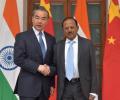
'Both sides had candid and in-depth discussions over easing the current border situation and reached positive common understandings,' it said. 'Both sides welcomed the progress achieved in the recent military and diplomatic meetings, agreed to stay in dialogue and consultation, and stressed the importance to promptly act on the consensus reached in the commander-level talks between Chinese and Indian border troops, and complete disengagement of the front-line troops as soon as possible,' it said.
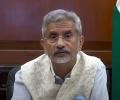
"Discussions are on; what is going on is something confidential between us and the Chinese," he said when the moderator at the Bloomberg India Economic Forum pressed the minister to give a clear status of the border situation.

After a gap of over three months, India and China on Wednesday are holding another round of high-level military talks to resolve the 20-month-long military standoff in the remaining friction points in eastern Ladakh, sources in the security establishment said.
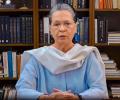
In her introductory remarks at an all-party meeting convened by Prime Minister Narendra Modi on the situation along the Line of Actual Control, Gandhi posed a set of questions to the government, asking specifics about when Chinese troops intruded into the Indian territory in Ladakh and whether the country's external intelligence agencies did not report any unusual activity there.

The marathon fourth round of Lt Gen-level talks also focussed on steps for pulling back large number of troops and weapons from rear bases along the Line of Actual Control in eastern Ladakh.
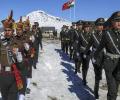
There was no breakthrough on the disengagement of troops from the friction points in eastern Ladakh during the seventh round of military talks on October 12. "The eighth round of military talks is likely to take place this week," said a source on Tuesday.

Official sources said withdrawal of tanks and other armoured elements from certain friction points is nearing completion while pulling back of troops from the North bank areas is being undertaken.
India and China failed to make any breakthrough, but agreed to maintain dialogue to arrive at a mutually acceptable resolution at the earliest.
'We should not minimise the seriousness of Chinese encroachments because their perception is different.' 'Nor should we fall into the trap of accepting so-called 'buffer zones' in areas of overlapping claims. We cannot have buffer zones in our own territory,' asserts Ambassador Shyam Saran, a former foreign secretary.

India and China have made "some progress" in disengagement, External Affairs Minister S Jaishankar said on Sunday, describing it as a "welcome" move which opens up the possibility that other steps could happen.

'Given China's past behaviour and their territorial claims, should we be sceptical regarding China's willingness to adhere to these agreements fully? The answer is yes.' 'As Ronald Reagan famously said in the context of the SALT talks, 'Trust, but verify!' India should also do the same.' 'This has already begun with foot patrolling, drones, satellite imagery and so on. India's military deployment did mirror China's and will continue to do so in the future.'
Talks between the two sides were held on June 6 at the military commanders' level, including the 14 Corps Commander Lt Gen Harinder Singh from the Indian side while the Chinese side was represented by its South Xinjiang Military District commander Major General Liu Lin at Moldo opposite Chushul in Ladakh.
"India and China to hold Corps Commander-level talks on October 12 in the Eastern Ladakh sector to address the ongoing military standoff between the two countries. So far, the two sides have held six rounds of Corps Commander-level talks," the source said.
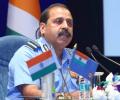
The Indian and Chinese troops are engaged in a five-month bitter standoff in eastern Ladakh.

'In Eastern Ladakh the Chinese attempted salami slicing.' 'Our response has been superb. Our military has responded magnificently.'
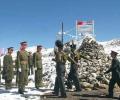
India on Monday pressed for early disengagement of troops in remaining friction points in eastern Ladakh during a fresh round of high-level military talks with China, people familiar with the matter said.

After a gap of over two-and-half months, India and China on Sunday held the ninth round of military talks specifically focusing on ways to move forward on the long-negotiated disengagement process in eastern Ladakh as thousands of their troops remained deployed at friction points under freezing conditions.

The agenda of the talks will be to firm up a roadmap for disengagement of troops from all the friction points in eastern Ladakh, the sources said.
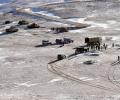
The Indian and Chinese troops are locked in an over three-year confrontation in certain friction points in eastern Ladakh even as the two sides completed disengagement from several areas following extensive diplomatic and military talks.

It is learnt that the Indian delegation insisted on a time-bound implementation of the agreement finalised during the extensive talks between External Affairs Minister S Jaishankar and his Chinese counterpart Wang Yi in Moscow on September 10 on the sidelines of a Shanghai Cooperation Organisation(SCO) meet.
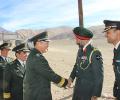
Amidst reports of Chinese incursions, the Peoples Liberation Army and the Indian Army on Sunday decided to uphold treaties and agreements signed between the governments of the two sides to maintain peace and tranquility along the Line of Actual Control.
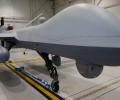
The defence ministry on Thursday accorded its approval to procure 30 MQ-9B Predator drones from the US to crank up the surveillance apparatus of the armed forces, especially along the frontier with China, people familiar with the development said.

It is the first highest level face-to-face meeting between the two sides after the border row escalated in eastern Ladakh in early May.

The sources said the Indian Army has been on a very high level of alert and is ready to deal with any eventuality in the area.

'They will continue to keep pricking at places where both of us are sensitive and keep the LAC alive.'

The talks took place over video call on Sunday. According to sources, talks were held for over two hours in a cordial and forward-looking manner.

The two sides are also expected to finalise a roadmap for restoration of peace and tranquility in the high-altitude region that witnessed an eight-week bitter standoff between the troops of the two countries.

Over 68,000 Army soldiers, around 90 tanks and other weapon systems were airlifted by the Indian Air Force to eastern Ladakh from across the country for rapid deployment along the Line of Actual Control (LAC) after the deadly clashes in the Galwan Valley, top sources in defence and security establishment said.

India on Thursday once again called for completion of the disengagement process at the remaining friction points in eastern Ladakh to pave the way for both the Indian and Chinese troops to consider de-escalation and ensure full restoration of peace and tranquillity in border areas.

The Indian side is expected to seek disengagement as soon as possible in the remaining friction points besides pressing for resolution of issues in Depsang Bulge and Demchok.

India and China held a special round of military talks on Tuesday at the Chushul-Moldo border meeting point in Eastern Ladakh to discuss air space violations and provocations by the Chinese side in that area in the last 45 days.

India's engagement with China is "complex" and Chinese attempts to unilaterally alter the status quo along the Line of Actual Control (LAC) in eastern Ladakh starting from April-May 2020 seriously disturbed the peace and tranquillity in border areas, the ministry of external affairs (MEA) said in a report on Monday.

China on Tuesday dismissed reports of fresh incursions by its troops into India as "routine patrolling" and asserted that both countries have a very effective and smooth mechanism to handle border incidents.

Sources said the Indian delegation was warmly greeted by senior officials of the Chinese Army before the talks began.

Indian graziers were stopped by Chinese troops from moving ahead near the Line of Actual Control (LAC) in the Demchok region of eastern Ladakh over a week ago, people familiar with the development said on Monday.

Making a statement in Lok Sabha, Singh also said the Indian Army has inflicted heavy costs including casualties on the Chinese side during the clash with the People's Liberation Army at the Galwan valley on June 15.
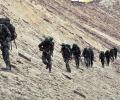
"Some steps are required for full normalcy, we have not reached there," Bagchi said.

Chief of Army Staff Gen Manoj Pande has carried out a comprehensive review of India's military preparedness along the Line of Actual Control (LAC) in Arunachal Pradesh in his first visit to the border state after last month's clash between Indian and Chinese forces in the Tawang sector.

Prime Minister Narendra Modi's bilateral meetings on the sidelines of the BRICS summit in Johannesburg are being finalised, Foreign Secretary Vinay Kwatra said on Monday but did not give a direct reply on the possibility of a meeting between Modi and Chinese President Xi Jinping.
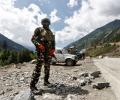
The top military brass reviewed the situation in eastern Ladakh and deliberated on key issues to be flagged at the talks on Monday, the sources said. Army Chief General M M Naravane and several top military officials were present in the meeting.
